

The adult social care sector in England is facing unprecedented challenges as demand for services continues to rise. This surge in need, coupled with workforce shortages and funding pressures, has significant implications for care providers, local authorities, and most importantly, the individuals who rely on these essential services. With these challenges also come a wealth of opportunities for those providing high-quality care in the domiciliary care market.
In this blog, we’ll explore the current landscape of adult social care in England with some health and social care facts. We’ll delve into the stats and what they mean for the future of care in the UK.
If you’re looking to start your own business and invest in the care industry, we offer franchise opportunities at Bridgewater Health Care that help make a difference while supporting career growth.
The demand for social care in 2025/26
Recent data paints a clear picture of the increasing demand for adult social care services in England:
From 2025 to 25, 2 million people made requests for social care support from local authorities.
This figure represents an all-time high and a significant increase from previous years. Breaking it down further:
- 665,000 requests came from working-age adults aged 18 – 65
- 1.3 million requests came from older people (aged 65 and over)
This surge in demand isn’t a temporary blip; it’s part of a longer-term trend, and since 2015/16, the number of people requesting support has grown by 9% and continues to rise.

What is causing the rise in social care demand?
There are several factors that have contributed to the growing demand for social care in the UK.
An ageing population
As people are continuing to live longer, the number of older adults requiring care is rising. In 2022, 19% of the population was aged over 65, and this is predicted to increase to 27% by 2072. The rise in adults with complex care needs has inevitably led to an increase in demand for social care.
Increasing disability rates
Disability among working-age adults has increased, and in 2024, 24.8% of the working population was disabled. This is a 50% increase since 2013, and this increase in disability leads to more pressure on social care services.
Post-Pandemic Effects
During the COVID-19 pandemic, the demand for support dipped, but afterwards the demand rose quickly, potentially a result of ongoing healthcare needs resulting from the virus. Although requests are high, fewer people are actually receiving long-term care. In 2021/22, 818,000 people received publicly funded long-term social care, a decrease of 55,000 from 2015/16.
This discrepancy highlights a growing gap between those who need care and those who receive it.
Workforce issues
The social care industry is also facing issues with staffing, and there is a significant strain on the existing workforce. A 2025 survey found that 56.6% of organisations found retaining staff challenging, and 71% found recruiting staff challenging.
With staff shortages and turnover being a notable issue, it’s more difficult to meet the sector’s growing demands.
The rising cost of care
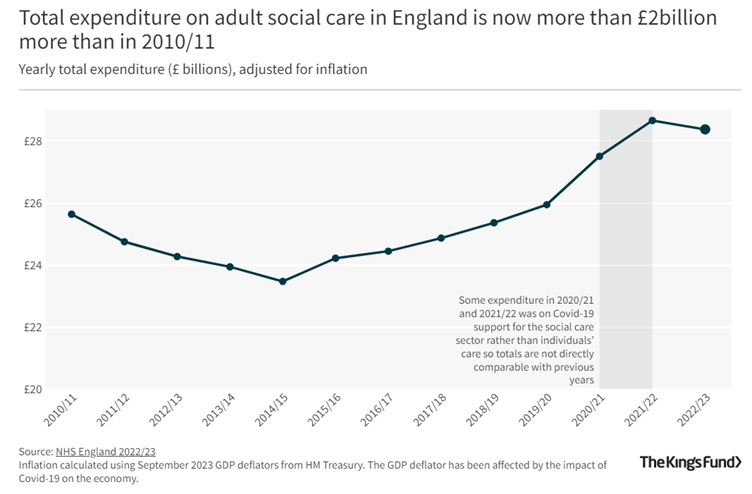
Social care has become more expensive for local councils as the demand and strain of various issues have increased. 30,000 more people received publicly funded long-term care in 2024/2025 compared to 2023, a 3% increase.
This in turn has increased spending on social care, with a 4.1% increase to a whopping £34.5bn. The demand for these services has caused local councils to fall into debt, and has also had a knock-on effect on the pricing of care for alternative services.
What does this mean for the future of adult social care?
These health and social care facts reveal the extent of demand for care services in England and the implications this has:
Increased pressure on informal carers: As formal care services struggle to meet demand, more responsibility may fall on family members and friends to provide unpaid care.
Impact on quality of care: Staffing shortages and financial pressures could potentially impact the quality of care provided.
Health System Impact: Inadequate social care provision can lead to increased pressure on NHS services, particularly in terms of delayed discharges from hospitals.
Need for Innovation in care: The sector needs to explore innovative models of care and technology solutions to meet growing demand efficiently.
Workforce Development: There’s an urgent need for strategies to recruit, retain, and develop the social care workforce.
Funding Reform: The current situation underscores the need for a sustainable, long-term funding solution for adult social care.

How to address social care issues
With the rising challenges of the growth of social care, there also come opportunities for those operating within the sector to improve their services.
Addressing the social care gap
It is evident that there is a growing gap between demand for social care and the provision of services. This poses huge opportunities to service this part of the market, to those who are currently unable to receive domiciliary care through the local authority, or those who have been let down by ‘private’ providers of care.
Maintaining high standards
With the concern of falling standards to cope with demand, it is evident there is a need for reliable, high-quality care that puts the needs of the client first. It’s only the providers that go above and beyond that will sustainably reap the benefits of a growing market.
Become a desirable employer
It’s currently an employee’s market in social care, meaning providers have to stand out as a responsible, supportive employer to attract and retain quality staff. Here at Bridgewater Home Care, we have the advantage of being an employer renowned for its supportive culture, career opportunities and low employee turnover, making us a brilliant choice for care staff and potential franchisees.
By providing training and support for staff, alongside a stable work environment, clients are able to receive the best quality care.
Private care alternatives
Inadequate provision of social care by local authorities poses huge opportunities for servicing the private-paying market with a high-quality service. For those unable to access local authority care or residential care, community home care can be a lifeline, not only for clients but also for their families.
Stay ahead with innovation
Care providers who dedicate time and resources to developing innovative strategies and technology can excel in the care industry and also ensure complex care needs are continuously met.
With an effective franchise business model, Bridgewater Home Care is able to stay one step ahead of the competition with smart technology, advanced operational systems and controlled care practices.
The growing demand for adult social care services in England presents both challenges and opportunities. While the current situation is undoubtedly challenging, it also highlights the critical importance of the care sector and the need for strategic investment and reform.
Transform your business and the care industry with Bridgewater
At Bridgewater Home Care, we’re committed to being part of the solution. By providing high-quality, person-centred care, we aim to meet the growing needs of our community while advocating for the changes necessary to ensure a sustainable future for adult social care in England.
If you’re looking to invest in a franchise, becoming a franchisee with Bridgewater offers you the opportunity to create meaningful change whilst also fuelling your own business growth.
Get in touch today for more information and to start your journey as a franchise owner.